Clove: Import & Save Recipes
- 4.5
- Rating
- 10.00K
- Installs
- Free
- Price

 Analysis by App-foxy
I like recipe apps that solve a real problem instead of simply collecting attractive food photos. Clove: Import & Save Recipes takes that practical route. It is a free Food & Drink app from Clove Kitchen built around bringing recipes from places where people already discover them, including Instagram and TikTok, then turning those ideas into something easier to use while shopping and cooking. After spending time with it, I see the appeal immediately: it sits between inspiration and the supermarket rather than asking me to start from a blank recipe file.
The important distinction is that Clove is not just another digital cookbook. Its value depends on the complete journey from finding a recipe to remembering what I actually need to buy. The interactive shopping-list approach makes that journey more useful than saving a social-media post and hoping I can find it again later. At the same time, the app is best understood as a focused organizer, not a replacement for every cooking tool. My experience was strongest when I used it to capture ideas quickly, tidy up meal planning, and keep ingredients visible during a grocery trip.
How Clove fits into the way I actually find and cook recipes
I find Clove most useful when I treat it as a bridge between discovering a dish and deciding whether I’ll actually cook it. In this section, I’ll look at how that everyday path shapes my expectations, including the small checks that keep a saved idea from becoming a misleading shopping plan. That leads naturally to the choices I can make before relying on an imported recipe.
You May Also Like

 AccuWeather: Weather Radar
AccuWeather Review: A Quick, Clear Forecast for Everyday Decisions
For everyday plans, the best forecast is the one you can understand quickly. AccuWeather makes rain timing, radar, and local conditions easy to act on, with a few trade-offs.

 Hill Climb Racing
Why Hill Climb Racing Still Turns Crashes Into One More Run
A tiny car, a bumpy hill and one more upgrade: Hill Climb Racing keeps resurfacing because its simple chaos makes every near-miss feel personal.

 AliExpress - Shopping App
AliExpress Makes Global Shopping Feel Personal, but Shoppers Bear the Risk
AliExpress turns a global marketplace into a pocket-sized discovery engine. Its reach is useful, its shopping loop compelling, and its trade-offs easy to miss.

 Lords Mobile: Kingdom Wars
Lords Mobile Is a Kingdom-Building Routine, Not a Quick Match
A case-by-case verdict on the building, battles, device demands, and social commitments that make Lords Mobile rewarding for some players and exhausting for others.

 PDF Scanner app - TapScanner
TapScanner Makes Paperwork Easier to Capture, Check, and Share
TapScanner makes scanning with a phone feel less like a rescue operation and more like a dependable step in getting work done. Its capture tools are useful, though not flawless.

 Block Blast!
 Shows How Much a Puzzle Game Can Leave Out
A quiet grid game shows why puzzle players increasingly value instant clarity, repeatable skill and low-pressure play—and where the genre still needs to catch up.
More From Our News Desk
View All News


From social discovery to a usable cooking plan
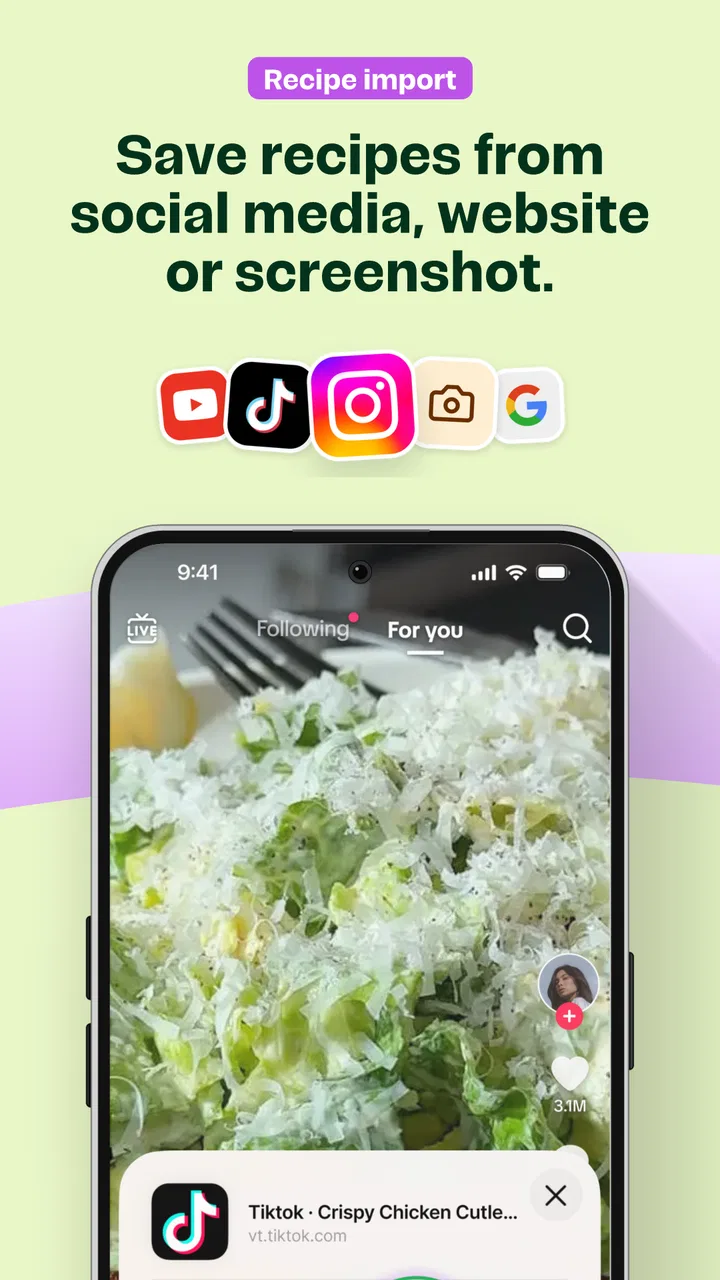
Most recipe discovery now happens in scattered places. I might see a short cooking video while browsing Instagram, save a promising clip on TikTok, or find a recipe somewhere else and forget where it came from. The usual alternative is a messy mixture of bookmarks, screenshots, saved posts, and notes. Clove addresses that particular mess by giving those discoveries a home designed for recipes rather than general content.
That workflow is more valuable than it may sound. A saved video is good for inspiration, but it is not automatically a shopping plan. When I return to a recipe days later, I want to know which ingredients matter, whether I have already bought them, and what else I intended to cook. The app’s interactive lists put attention on that practical step. I can think about a meal as a set of ingredients instead of repeatedly reopening several social apps while standing in a store.
I also found that the app makes sense for people who cook from a mixture of sources. Someone may follow a creator for quick weekday meals, use a family recipe occasionally, and collect ideas from food sites at the same time. Rather than forcing all those habits into one publishing style, Clove is useful as a personal layer above them. That is a more believable reason to install it than simply wanting another place to browse recipes.
What feels quick, and where expectations should stay realistic
The perceived speed of Clove comes mainly from reducing repeated steps. Importing an idea is more direct than manually copying a caption into a note, while checking items off a list is faster than switching between a recipe page and a shopping app. In everyday use, that kind of speed matters more than decorative transitions. The app feels most efficient when I already know what I want to save and need to turn it into an organized reference.
There is a trade-off, though. Imported recipes originate in different formats, and social posts are not written with identical structure or clarity. I would not assume that every imported recipe will be perfectly tidy without a quick review. Ingredient wording, quantities, optional additions, and instructions can need attention, particularly when the original content is designed as a short video rather than a full written recipe. That is not a reason to reject Clove; it is a reason to treat importing as the start of organizing, not a guarantee of editorial perfection.
For a person who wants a fully curated cookbook with consistent measurements and carefully tested instructions, a traditional recipe service may be a better fit. Clove is more appealing when the reader values flexibility and wants to preserve recipes discovered in the wild. Its speed comes from connecting discovery with planning, not from eliminating every moment of checking.
A realistic weeknight example
Imagine I am planning three dinners before going to the supermarket. I have saved a pasta idea from Instagram, a quick bowl from TikTok, and a recipe found elsewhere. With a conventional setup, I might open each source separately, write ingredients into a note, and then cross out items I already have at home. That process is easy to postpone, and postponed planning usually becomes a last-minute takeaway order.
With Clove, I would bring those recipes into one place first, inspect the ingredient information, and build the shopping list around the meals. In the store, the interactive list becomes the useful part: I can mark items as I pick them up rather than relying on memory. If an ingredient is already in my cupboard, I can avoid treating it as a new purchase. The app does not cook dinner for me, but it removes several small decisions that normally create friction.
A less obvious benefit is that this workflow exposes duplication. Two recipes may both require the same basic ingredient, and seeing them together can change what I buy or which meal I prepare first. It also helps me notice when a social-media recipe is more complicated than it looked in a short clip. That moment of comparison is valuable because it turns attractive inspiration into a realistic plan.
Where the app is most useful during heavy use
Clove becomes more valuable when I am handling several recipes at once rather than saving a single dish. A lone recipe can live comfortably in a browser tab or a saved post. The advantage of a dedicated organizer appears when several meals compete for attention, when shopping involves many ingredients, or when I am trying to use what is already at home before buying more.
Heavy use also reveals the need for a deliberate routine. I would import recipes in batches, then review them before building a list. Doing everything at the supermarket, with multiple sources open and a poor connection, is a less comfortable approach than preparing the list at home. The app’s concept supports planning, but it does not remove the need for sensible preparation.
One practical tip is to separate inspiration from commitment. I would save interesting recipes freely, but only add ingredients to a shopping list after deciding that I will genuinely cook the dish. This prevents the list from becoming a graveyard of aspirational meals. Another useful habit is to check serving assumptions and pantry staples before shopping, because a visually simple recipe can still create unnecessary duplicate purchases if I accept every ingredient without thinking.
Stability, recovery, and the confidence to rely on it
For a recipe organizer, reliability is not only about whether the app opens. It is about whether my saved ideas and shopping decisions remain understandable when I return later. Clove’s purpose makes recovery especially important: the whole point is to avoid losing recipes among social-media saves. I therefore judge it by how confidently I can move from an imported recipe back to the shopping list and then to the cooking step.
I would still keep a sensible backup habit for an important meal. If I am cooking for guests or following a recipe with unusual quantities, I prefer to leave the original source accessible until I have checked the imported version. That is not a criticism unique to Clove; it is a sensible precaution whenever information moves from one platform into another. A short video may leave details in its spoken audio, caption, or comments, and no organizer should be treated as a substitute for reading the original carefully when precision matters.
The recovery advantage of a dedicated list is clearer during shopping. If I am interrupted, change stores, or split the trip across two visits, a checklist is easier to resume than a collection of screenshots. I can see what remains rather than reconstructing my plan from memory. That is a small but meaningful improvement for busy households, especially when several people contribute to the same meal planning process.
Device requirements and the question of resources
Clove supports Android devices running version 7.0 or later, which gives it a broad practical reach among people using older phones. That is useful for a kitchen app because many users may prefer to keep an older device nearby for cooking rather than risk flour, water, or oil around a newer phone. The Everyone content rating also makes the app suitable for a household audience rather than a narrowly restricted age group.
I would not choose a device solely for Clove, but the app’s role suggests a few sensible considerations. Recipe importing may involve moving between Clove and social platforms, while shopping-list use benefits from a screen that is easy to read with one hand. A compact older phone can handle the basic planning role well, but a very small display may make long ingredient lists less comfortable to scan. That is a usability trade-off rather than a claim about a particular performance limit.
Resource demands are also best considered by workflow. If I am only checking a prepared list, the app should feel like a lightweight companion compared with constantly browsing video feeds. If I am importing content while jumping between several services, the overall experience naturally depends on more than Clove alone. Social video apps can be demanding, and the phone’s available storage, memory, and connection quality may affect the complete process even when the recipe organizer itself is simple.
For older hardware, I would prepare recipes before leaving home, keep the shopping list focused, and avoid relying on a last-second import in a crowded store. This approach reduces the number of moving parts and makes the app feel more dependable. It also highlights an important limitation: Clove improves organization, but it cannot guarantee a smooth experience when the surrounding services or network conditions are struggling.
How it compares with notes, bookmarks, and recipe platforms
The simplest alternative is a notes app. Notes are excellent for free-form writing, pantry reminders, substitutions, and personal comments. They are also available almost everywhere. However, they usually require manual copying, and a note does not automatically preserve the relationship between a discovered recipe and the ingredients I need to buy. Clove is the better choice when that relationship is the main problem.
Browser bookmarks and social-media saves are convenient at the discovery stage, but they become less useful as the collection grows. They tell me where something is, not necessarily how it fits into this week’s meals. Clove has a clearer purpose for turning saved inspiration into action. I would still keep bookmarks for long-form references or pages I revisit for background information, while using Clove for recipes I want to cook soon.
Traditional recipe platforms can win on consistency, search depth, and editorial structure. If I want dependable step-by-step instructions, nutritional information, substitutions, or a large catalog organized by dietary needs, a specialist recipe service may offer more depth. Clove’s advantage is different: it respects the way recipes are actually discovered on social platforms and helps me make those discoveries practical. Neither approach fully replaces the other.
That distinction also clarifies who should skip it. I would not recommend Clove as the first choice for someone who rarely saves online recipes, cooks from a fixed family cookbook, or wants a complete meal-planning system with extensive dietary analysis. I would recommend it to someone whose recipe collection is spread across Instagram, TikTok, and other sources and who is tired of rebuilding a shopping list every time.
What the current release tells me about the app’s direction
The current version is 1.36.0, and the app was released on April 6, 2025. Those details place Clove in a relatively early stage compared with long-established cooking platforms, so I approach it as a focused product that may continue refining how imports and lists behave. That is not automatically negative. Smaller, clearer tools can be more pleasant than large services filled with features I never use.
Clove Kitchen has chosen a sensible center of gravity: capture recipes from modern discovery channels and make shopping more interactive. The average rating of 4.5 from around 152 ratings suggests that the concept is resonating with the people who have tried it, while the install count of over 10 thousand indicates a growing but still modest audience. I read those figures as encouragement to try it, not as proof that it will suit every cooking style.
The free price lowers the risk of testing the workflow for myself. I can see whether importing, reviewing, and checking off ingredients actually fits my habits without first committing to a paid cooking subscription. That matters because the app’s value is personal: someone who already has a disciplined system may gain little, while someone who loses recipes between platforms may notice an immediate improvement.
My performance verdict after using it as a planning tool
My overall impression is that Clove feels most effective when I use it before the pressure of cooking begins. Import recipes at a calm moment, inspect the details, decide which meals are realistic, and then create a focused shopping list. Used that way, it reduces mental overhead and gives scattered online inspiration a practical destination. The app’s strongest performance is therefore workflow performance: fewer repeated searches, fewer handwritten scraps, and a clearer path from saved idea to purchased ingredients.
It is less convincing as a completely automatic solution. I still need to review imported content, account for pantry items, and keep the original source in mind when a short video omits important detail. People expecting every recipe to arrive perfectly structured may find that extra checking frustrating. People who enjoy curating their own collection will probably see that step as a useful part of the process.
After trying the usual alternatives in my head and in everyday planning, I would choose Clove over a generic notes app when my recipes come from social media and shopping is the main pain point. I would choose a more established recipe platform when I need deep editorial guidance or specialized meal planning. That is a clear and healthy position for this app to occupy rather than a weakness: it does one modern cooking job particularly well.
My recommendation is simple: install Clove if your saved recipes are scattered and your shopping trips feel disconnected from your online inspiration. Start with a small batch, review each imported recipe, and build one realistic list before judging it. If that routine saves you from reopening several apps and forgetting key ingredients, the free app has earned its place on your phone. If your cooking already revolves around a single cookbook or you need highly detailed dietary tools, I would look elsewhere instead.
FAQs for Clove: Import & Save Recipes
01What is Clove: Import & Save Recipes?
Clove is a versatile recipe management app designed for both Android and iOS users. It allows you to import recipes from various websites, organize them in one place, and save them for future use. With an intuitive interface, Clove helps home cooks keep their favorite recipes easily accessible.
02How does Clove import recipes from websites?
Clove uses a smart algorithm to import recipes directly from popular cooking websites. Simply share the recipe URL with the app, and it will automatically extract the necessary information, including ingredients, instructions, and images. This feature streamlines the process, allowing you to collect recipes effortlessly.
03Can I customize my recipe collection in Clove?
Yes, Clove offers extensive customization options. You can categorize recipes by cuisine, dietary preferences, or personal tags. Additionally, you can add notes or adjust ingredient quantities to suit your taste. This flexibility ensures that your recipe collection is tailored to your specific culinary needs.
04Does Clove support offline access to recipes?
Absolutely. Once you've imported and saved a recipe in Clove, it becomes accessible offline. This feature is particularly useful for users who cook in areas with limited internet connectivity, ensuring that your favorite recipes are always at your fingertips, regardless of your location.
05Is Clove free to use, or does it require a subscription?
Clove offers a free version with basic features, making it accessible to all users. For those seeking enhanced functionality, such as advanced search and additional storage, Clove also provides a premium subscription option. This tiered approach allows users to choose the level of service that best fits their needs.
Pros
- User-friendly interface for easy navigation.
- Supports importing recipes from multiple sites.
- Allows categorization of saved recipes.
- Offline access to saved recipes.
- Customizable recipe organization.
Cons
- Limited free features without subscription.
- No integration with shopping list apps.
- Occasional sync issues reported by users.
- Lacks community features for sharing.
- No video tutorials within the app.

Clove: Import & Save Recipes
Gallery